FitnessGuide
Zumba and Aerobics: How Instructors Count a 32-Count Block
A 32-count block is four 8-counts, 1 to 8 four times. Here is how Zumba and aerobics instructors count it, cue ahead and match tempo to the rhythm.
5 min readWritten at Count Studio
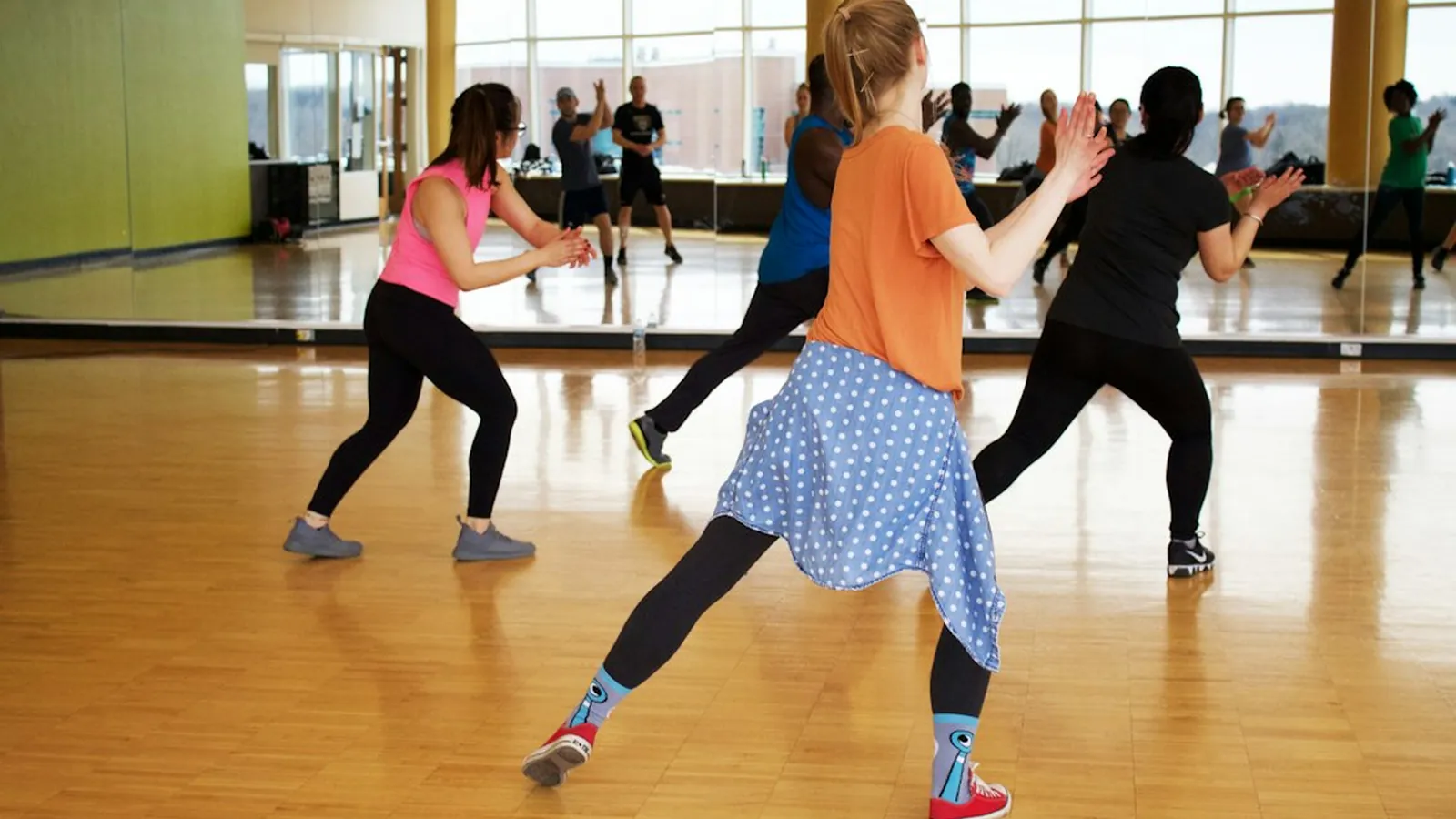
Walk into a Zumba or aerobics class and the instructor is counting the whole time, even when you barely hear it. Under the cues sits one simple frame: the 32-count block. Here is how it's built, how instructors count it and how to practise it.
How do instructors count a 32-count block?
They count 1 2 3 4 5 6 7 8 four times in a row, then start the next block on a fresh 1. That is four 8-counts: 32 counts in all. ACE says it is typical for music to be orchestrated in a series of 32 counts, made of 8-count sentences and 4-measure paragraphs. If the 8-count is new to you, start with what an 8-count is.
Before the first block the instructor counts the class in with "5, 6, 7, 8". Those four counts are not steps. The first move lands on the 1 right after them.
Step by step: the four eights in a block
Think of the block as four short sentences that make one paragraph. Each eight has its own job. The whole block usually repeats, or changes, as one.
| Eight | Counts | What it often holds |
|---|---|---|
| Eight 1 | 1 2 3 4 5 6 7 8 | The base move, first time |
| Eight 2 | 1 2 3 4 5 6 7 8 | The base move again, or the other side |
| Eight 3 | 1 2 3 4 5 6 7 8 | A variation or a travelling step |
| Eight 4 | 1 2 3 4 5 6 7 8 | A finish that sets up the next block |
The moves in that table are examples. Your instructor decides what goes in each eight. The counting never changes.
Instructors also build a class out of blocks. IDEA's cardio step routine uses a 32-count combination in the warm-up and a 3-x-32-count combination in the main section, and builds it by layering: adding a double stomp to a march, for example. When a move changes on the 1 of the block, the whole class feels it together.
In rhythms with a half-count, such as many Latin dance-fitness songs, you may hear it counted "1 & 2 & 3 & 4 &". The & sits halfway between two numbers, and the block is still 32 counts long.
Tempo by rhythm: how fast is each block?
The count stays put. The speed doesn't. The same 32 counts take longer in a slow song than in a fast one. Here are the figures we can source.
| Rhythm or class | Tempo (bpm) | Where it comes from |
|---|---|---|
| Reggaeton | about 90 to 100 | Count Studio's count library |
| Merengue | 130 to 160 | Count Studio's count library |
| Merengue típico | 130 to 140 originally, sometimes 160 to 190 today | Wikipedia |
| Step aerobics | typically 118 to 122, advanced sometimes 126 to 128 | Wikipedia |
| Cardio step | 125 to 132 | IDEA |
Sources don't agree on step tempo, and that's normal: they describe different classes and levels. ACE groups classes by band instead: 100 to 122 bpm for beginner step training and low-impact aerobics, 122 to 129 for advanced step training and low-to-mid impact work, and 130 to 160 for faster, mid-to-high impact classes and some dance. For every other style, see our tempo chart for every style.
Step classes sit lower because the foot has to land on a platform. Count Studio's library keeps its step block between 118 and 130 for that reason.
How do you find the 1 in the music?
The 1 is the strongest beat of the phrase, and the block restarts on it. ACE describes a measure as a series of beats with a strong accent on the first downbeat, and a phrase as a group of measures; the music supplies the beats and phrases for cuing. Wikipedia adds that step choreography needs a predictable 32-beat, eight-measure sequence.
To find it yourself, listen for the change: a new instrument, a heavier beat or a lyric starting. Count 1 to 8 from there. If the next change lands on your 33, you have the block. For the full method, see how to find the 1 in the music.
How do instructors cue ahead?
Cueing ahead means naming the next move before it arrives. If the class should change on the 1 of the next block, the instructor says it on 7 or 8 of the block before, so everyone moves on the 1 together instead of reacting late.
The habit has three parts:
- Say the move early. Name it while the class is still finishing the old one.
- Say the counts out loud. Counting 5, 6, 7, 8 on the last eight tells people the change is coming.
- Keep the block in your head. You cannot cue ahead if you do not know which eight you are in.
What goes wrong with a 32-count block?
- Losing the block. Mid-song it is easy to forget which eight you are in. Say the number of the eight in your head: "eight 1, eight 2".
- Treating every song as 32. Some choreography is written in other lengths. Line dances, for instance, are described in 32, 48 and 64 counts. Count what the music gives you.
- Counting the 5, 6, 7, 8 as steps. It is the count-in. The first move lands on the 1.
- Rushing the change. Moves change on the 1. If you move on the 8, you are early.
Practise it with Count Studio
Drill one eight until it is clean, then link two, then do the whole 32. Keep counting out loud, even when it feels silly.
Count Studio, coming November 27 to iPhone, iPad and Apple Watch, counts music in eights for dancers. Its fitness family has a Zumba 32-count block, an Aerobics 32-count block and a Step 32-count block, each shown as four eights on a strip of floor tape. You can import a song you own, and the app finds the tempo, the beats and the likely 1 on your device and numbers the eights. You can slow the song down without changing its pitch and loop a stretch by its counts, like eights 9 to 12.
Bottom line
A 32-count block is four 8-counts: 1 to 8, four times, with the next move landing on the 1. Match the tempo to the rhythm or class, find the 1 in the music and cue the change a few counts early.
Questions
How many counts is a Zumba block?
32 counts, which is four 8-counts. You count 1 to 8 four times, and the moves usually change on the 1 of an eight or on the 1 of the whole block.
Why do instructors count 5, 6, 7, 8 before the music starts?
It is the count-in. It tells the class where the first 1 lands so everyone starts together. The 5, 6, 7, 8 are not steps.
What tempo is a step aerobics class?
Wikipedia gives 118 to 122 bpm for step music, with advanced classes sometimes at 126 to 128. IDEA recommends 125 to 132 for cardio step, so the range depends on who you ask.
What does cueing ahead mean?
It means naming the next move a few counts before it starts, so the class changes on the 1 together instead of reacting a beat late.