FitnessPost
Step Aerobics BPM: Tempo and the 32-Count Block
Step aerobics music runs about 118 to 128 BPM, with choreography built in 32-count blocks of four 8-counts. Here is how to read the tempo and count the block.
5 min readWritten at Count Studio
Short answer
Step aerobics music runs at about 118 to 128 BPM. Wikipedia puts typical step music at 118 to 122 BPM, with 126 to 128 BPM sometimes used for advanced classes. The choreography is built in 32-count blocks: four 8-counts in 4/4, each written 1&2&3&4&5&6&7&8&, after a 5 6 7 8 lead-in.
BPM means beats per minute. At 120 BPM there are two beats every second, so one 8-count lasts four seconds and a full 32-count block lasts sixteen.
Step aerobics BPM: the ranges
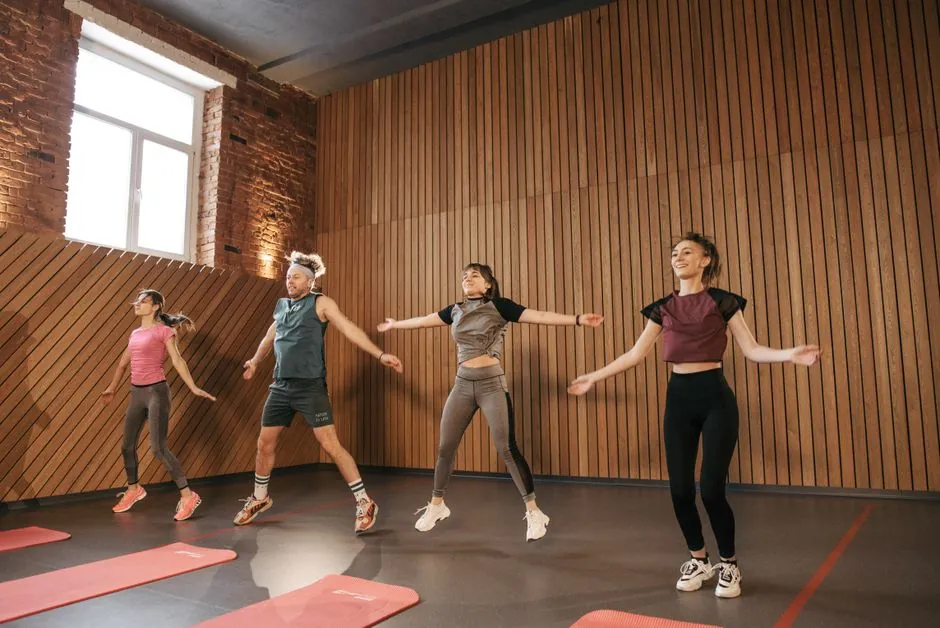
Photo by Pavel Danilyuk on Pexels
The sources give slightly different numbers, because each describes something a little different. Here they are side by side:
| Source | What it says | BPM |
|---|---|---|
| Wikipedia | Typical step music | 118-122 |
| Wikipedia | Sometimes used for advanced classes | 126-128 |
| Wikipedia | Reebok's ceiling, its "fastest permissible speed" | 128 |
| Count Studio count library | Step classes, as noted in the entry | about 120-128 |
| Count Studio count library | The entry's stored range | 118-130 |
Read it as a band, not a single number. The centre is around 120 BPM, a medium tempo. Beginners and low platforms sit at the bottom of the band, and the top is reserved for experienced steppers on a higher platform. The library gives the reason for the cap: the tempo is kept in this range so the foot can land on the platform safely.
The platform matters here. Wikipedia describes platform heights starting at 4 inches (10 cm) and rising in 2-inch (5 cm) steps to 8 inches (20 cm), with lower heights for beginners. A higher platform and a faster track both make each step harder, so you rarely raise both at once.
How a 32-count block is counted
A step class isn't counted beat by beat for 45 minutes. It's counted in blocks. The Step 32-count block in the Count Studio library is four 8-counts, written like this:
1&2&3&4&5&6&7&8& | 1&2&3&4&5&6&7&8& | 1&2&3&4&5&6&7&8& | 1&2&3&4&5&6&7&8&
Each eight is grouped 4+4, so there is a natural pause for the eye and the cue halfway through. Each number is a beat and each & is the half-beat between, which is where a tap, a lift or a change of foot can land.
Why 32? Wikipedia says that choreography requires the music to present a predictable 32-beat, eight-measure sequence. Eight measures of 4/4 is 32 beats, so a block always ends on a measure line, and the music and the moves turn over together. A good step track gives you that phrase again and again, no surprises.
If you also teach other formats, the same structure turns up in how instructors count a 32-count block in Zumba and other floor classes. Step has a platform to land on, so the tempo ceiling is lower.
Cueing the lead-in
The 5 6 7 8 comes before the first 1 of a block. Four counts of lead-in give the class time to get ready and show everyone where the downbeat is. If you are new to the idea, what 5, 6, 7, 8 means is covered in its own article.
A few habits make cueing easier:
- Say the lead-in out loud, on the beat, with the same energy as the count that follows.
- Cue the next move before the block turns, not on the 1. Give the class the last four counts of the old block to see what is coming.
- Keep your cues on the 8s. If the block is 32 counts, the moves change on counts 1, 9, 17 and 25, and the class learns to expect it.
- Count the
&quietly on fast sections. You don't need to say every half-beat, but feel it.
Choosing step music
Wikipedia says the style of music should emphasise the beat, and contrasts a steady beat with offbeat syncopation. For step, that means a clear four-on-the-floor pulse and a track that keeps the 32-beat phrase intact.
A simple way to pick tracks:
- Find the track's tempo and check that it sits in the 118 to 128 BPM band.
- Listen for the phrase. Count 8s along with the music and check that the sections change every 32 beats.
- Avoid tracks with long breaks or tempo changes unless you plan to cue them.
- Match the tempo to the room: slower for a beginner class, the upper end for experienced steppers.
BPM values are approximate, so a track listed at 122 may feel different from another at 122. For BPM across other styles, see BPM for every style.
Practise it
- Start at the slow end of the band, around 118 BPM, and count out loud: lead-in
5 6 7 8, then one full block of1&2&3&4&5&6&7&8&four times. - Mark the turn of each 8-count with a small cue, such as a hand signal or a step, so you can feel where the block is.
- Raise the tempo a few BPM at a time and stop at the speed where your cues stay clean.
- Run a track through, counting only the lead-in and the first 1 of each block, then let the moves carry the rest.
Count Studio has the Step 32-count block in its count library with the 5 6 7 8 lead-in, sets the speed anywhere from 20 to 320 BPM, and lets you tap the beat to set the speed from the track you are teaching to. It is coming November 27 to iPhone, iPad and Apple Watch.
Bottom line
Step aerobics sits at roughly 118 to 128 BPM in 4/4, and the number keeps the foot landing safely on the platform. Count it in 32-count blocks of four 8-counts, cue the 5 6 7 8 lead-in, and pick tracks with a steady beat and a predictable phrase.
Questions
What BPM is step aerobics music?
Typically 118 to 122 BPM, and sometimes 126 to 128 BPM for advanced classes, according to Wikipedia. Count Studio's count library notes that step classes run about 120 to 128 BPM.
How many counts are in a step aerobics block?
32: four 8-counts. Each eight is counted 1&2&3&4&5&6&7&8& in 4/4, grouped 4+4, after a 5 6 7 8 lead-in.
Why does step music stop around 128 BPM?
Reebok set 128 BPM as the fastest permissible speed for its step classes. The count library gives the same reason for its range: the foot has to land on the platform safely.
What does 5 6 7 8 mean in a step class?
It is the lead-in. Four counts are spoken before the first 1 so the whole class steps off together on the downbeat.