
BalletPost
Ballet 'And 1' Counts: What the 'And' Before the 1 Is For
The 'and' before the 1 is the lead-in that prepares the first count. Here is how ballet adagio, 3/4, 6/8 and petit allegro use it.
4 min readWritten at Count Studio
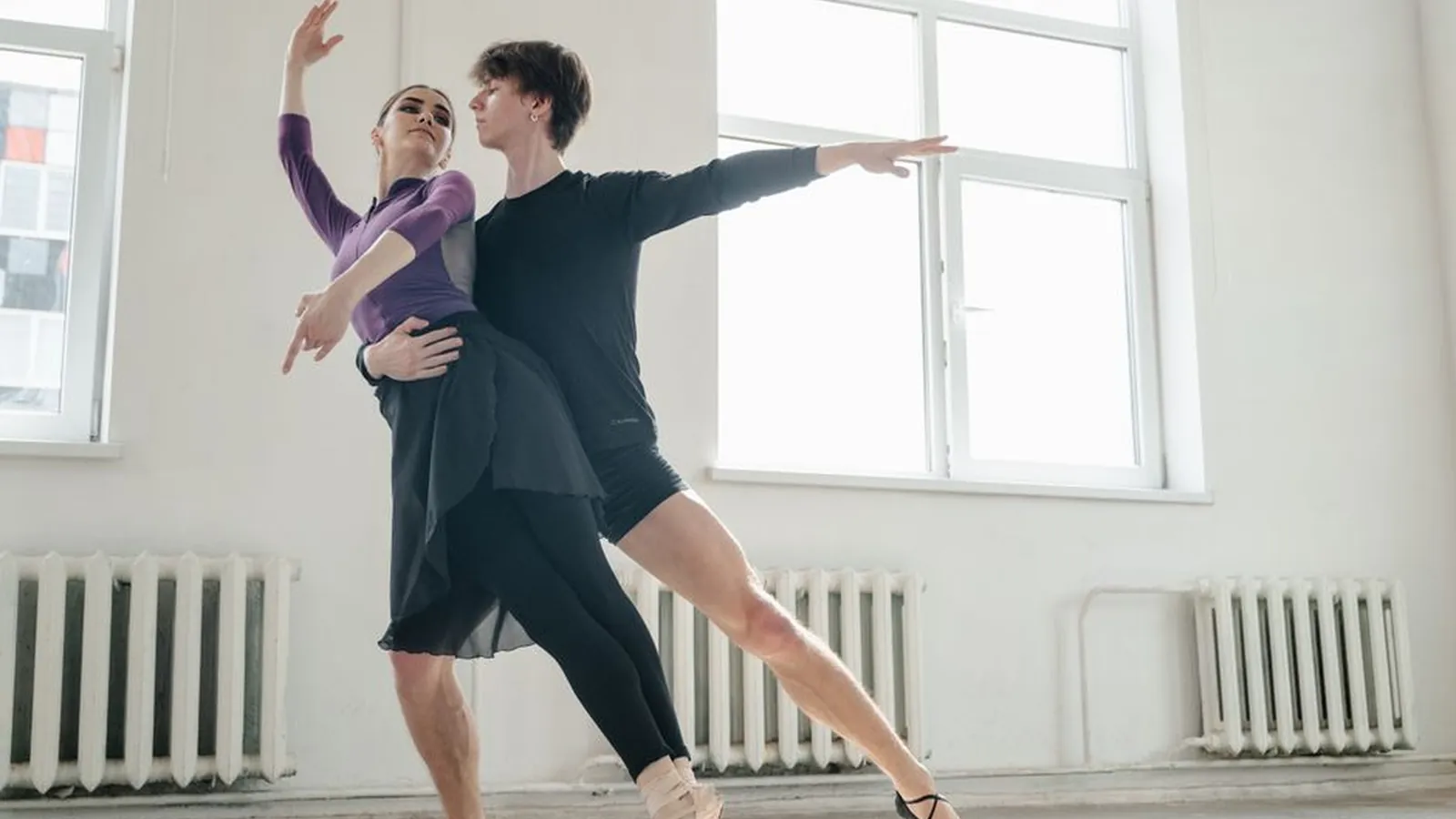
Your teacher says "and", and then the music starts. That small word isn't a beat you dance on. It's the breath before the 1.
What is the "and" before the 1 in ballet?
The "and" before the 1 is the lead-in: the pickup that prepares the first count of a phrase. In adagio it sounds like this: and 1 and 2 and 3 and 4. You move, breathe or set your arms on the "and", and the 1 lands as the first beat of the bar.
Music theory has a name for it. An anacrusis, also called a pickup or upbeat, is a note or short motif that comes before the first downbeat of a phrase. It serves as a preparation for the strong beat that follows, without the same weight of sound. The 1 stays the 1; the "and" gets you there.
How is the "and" counted?
In counting, upbeats are written with a plus sign and called "and", and they fall between the numbered beats. Finer divisions add "e" and "a" (1 e and a 2 e and a). So the "and" is simply the halfway point between one count and the next, and the one before the 1 is the halfway point before the bar begins.
Count Studio's count library lists four ballet counts that use a lead-in. Its source for them is ballet class counting as taught in RAD, Cecchetti and Vaganova practice.
| Ballet count | Meter | Tempo | Lead-in | How it reads |
|---|---|---|---|---|
| Adagio (slow 4) | 4/4 | 40-70 BPM | "and" | 1and2and3and4and |
| 3/4 | 3/4 | 72-180 BPM | "and a" | 1and2and3and |
| 6/8 in two | 6/8 | 50-120 BPM (dotted beats) | "and a" | 1anda2anda |
| Petit allegro | 2/4 | 100-140 BPM | "and" | 1and2and |
In 6/8 the tempo is counted in dotted beats, so two big beats fill each bar.
Where will you hear it in class?
You'll hear it wherever a phrase needs a preparation before the first count.
- Adagio and développés. Slow 4s at 40 to 70 BPM leave room for every "and":
1and2and3and4and. Each "and" is a small breath between slow counts. - Petit allegro. In quick 2/4 jumps at 100 to 140 BPM, many steps start on the "and" pickup, not on the number. That is why a teacher says "and" and the class goes.
- Waltz time. Ballet 3/4 is counted either
1 2 3orand 1 and 2 and 3. The 3/4 waltz count goes through both. Repeated pickups are also a common way to weight the first beat of a waltz bar.
More of the same family lives in the ballet counting guides.
"And" or "and a": which lead-in do you use?
Match the lead-in to the meter, then to the room. A bar of 4/4 adagio or 2/4 petit allegro takes a plain "and": one syllable, one half beat of preparation. Ballet 3/4 and 6/8 in two take "and a", two syllables that carry you into the 1, as in and a 1 2 3 or anda 1 anda 2.
If you are not sure, listen to the phrase before yours. The accompanist or the track usually shows the pickup in the last half beat before the bar begins. Say your lead-in into that gap, so the word ends right where the 1 starts. Teachers often cue the preparation out loud for exactly this reason: it gives the whole class the same start.
How do you count a class in with the "and"?
Counting a class in means giving the tempo and the entry in one short phrase. For adagio, that is the lead-in followed by the count: and 1 and 2 and 3 and 4. Slow, even syllables tell the room how fast the first bar will go. For petit allegro, say the "and" crisply and the number shorter still, because the jump starts on the pickup.
Say it once at the tempo you want, then dance. If the class comes in early, slow the "and". If they come in late, shorten it. The lead-in is your tempo, and the 1 is where everyone arrives together.
What goes wrong with the "and"?
- Dancing on the "and" as if it were the 1. The preparation is not the first count. If you step on the "and", you land a half beat early, and the whole phrase shifts.
- Skipping the preparation. Starting on the 1 with no "and" means no breath, no set-up and a late first step.
- Mixing up "and" and "and a". A 6/8 or 3/4 lead-in is "and a", a bar of 4/4 adagio takes a plain "and". Listen for the meter before you pick the word.
- Saying every "and" at speed. At faster tempos counters skip syllables and say just the numbers. Keep the "and" in your body; you do not have to say it.
How do you practise it?
Start slow. Say the lead-in, then count four bars of adagio, and 1 and 2 and 3 and 4, at the low end of the range, around 40 BPM, and stay on the "and" before each new phrase. Clap or tap the "and" lightly and the number firmly. Then raise the tempo a few BPM at a time, until the lead-in feels like a breath and not a hurdle.
Count Studio has this count as the Ballet adagio (slow 4) pattern, with the "and" lead-in built in, so the "and" is counted in before the 1. Count Studio is coming November 27 to iPhone, iPad and Apple Watch.
Bottom line
The "and" before the 1 is the preparation: a pickup that comes before the first downbeat and sets up the first count. Adagio and petit allegro use a plain "and"; 3/4 and 6/8 in two use "and a". Say it, breathe on it, and land the 1 on the beat.
Questions
What does 'and' mean in ballet counts?
It names the upbeat that falls between two numbered beats. Before the first count of a phrase it is the lead-in: the pickup that prepares the 1.
Is the 'and' before the 1 part of the first bar?
No. It comes before the first downbeat, so the 1 is still the first count of the bar. The 'and' is the preparation, not a beat in the bar.
Why do some ballet counts use 'and a' instead of 'and'?
The Count Studio library lists an 'and a' lead-in for ballet 3/4 and 6/8 in two, and a plain 'and' for 4/4 adagio and 2/4 petit allegro.
Do I say every 'and' out loud in a fast allegro?
Not usually. At faster tempos counters drop syllables and say only the numbers. The 'and' stays in the music and in your body.